
Choosing a countertop material for a commercial space involves more than finding the right color. Reception areas, employee kitchens, restroom vanities, and service counters each have different demands. The material should support the design while fitting the way the space will be used and maintained.
Solid surface and quartz are two options worth considering. Understanding their differences can help project teams make a more informed choice.
What Is Solid Surface?
Solid surface is a manufactured surfacing material made from mineral fillers and resins. One of its defining features is its consistent composition throughout the material. Pieces can be joined with inconspicuous seams, creating a continuous appearance across counters and other fabricated features.

Solid surface reception desk at JHHS CMSC & North Tower
What Is Quartz?
Quartz countertops are engineered surfaces made from natural quartz combined with binders and pigments. They are available in a range of colors and patterns, including designs that resemble marble or granite.
Quartz can be a useful option when a project calls for a stone appearance with a nonporous surface. Specific properties and care requirements depend on the selected product.
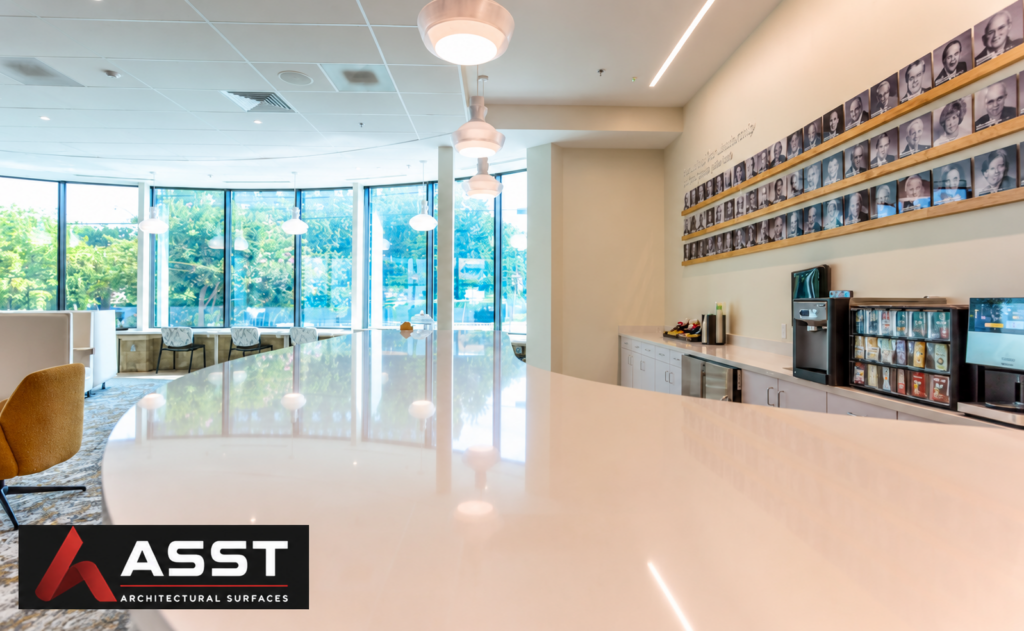
Quartz countertop at JCC 5700 Park Heights
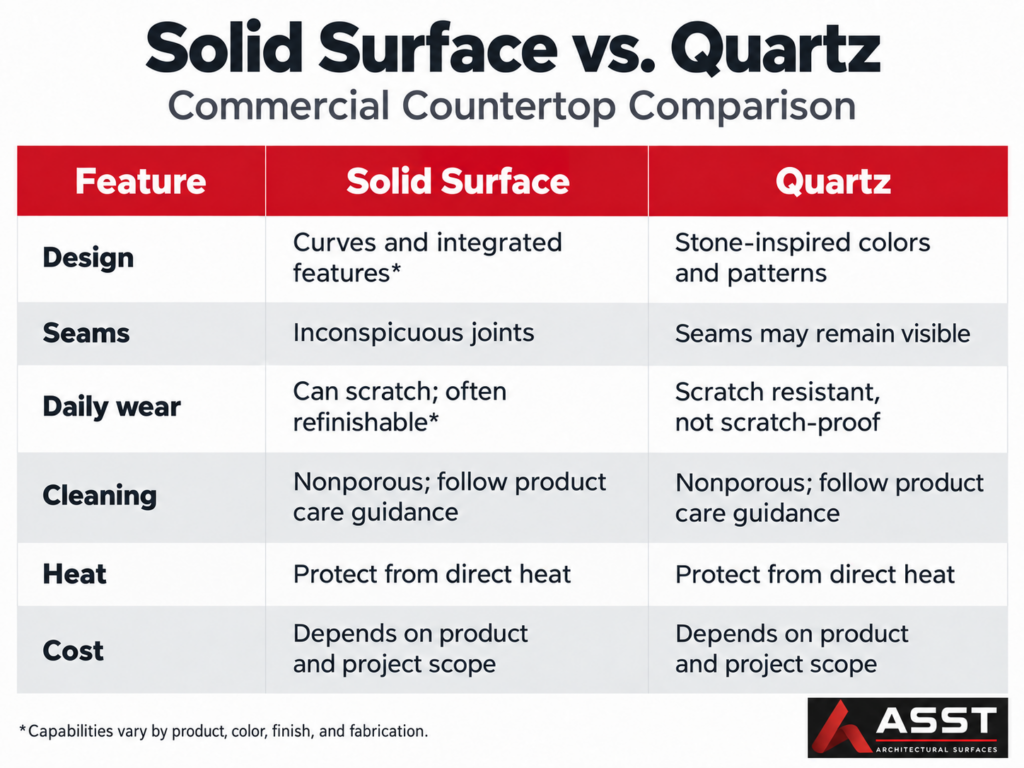
Solid Surface vs. Quartz at a Glance
Design Flexibility and Appearance
Solid surface deserves consideration when a design calls for flowing shapes or a visually continuous installation. Certain solid surface products can be thermoformed—a process that uses heat to shape the material into curves. The possibilities depend on the product, color, thickness, and fabrication requirements.
Solid surface can also accommodate integrated sinks and backsplashes, helping create a unified appearance.
Quartz offers another design direction, particularly when natural stone patterns and veining are central to the concept. Reviewing physical samples helps the project team evaluate how a selected pattern will work with cabinetry, flooring, and other finishes.
Daily Wear and Repairability
Every commercial countertop experiences wear. Material selection should account for both everyday use and how damage will be addressed.
Solid surface can develop scratches and abrasion marks. However, products such as Corian Solid Surface can often be refinished or repaired. Deeper damage and work requiring a consistent finish are best evaluated by a qualified professional.
Quartz products are scratch resistant, but they are not scratch-proof or chip-proof. Impacts around exposed edges and sink openings can cause damage. Protective practices remain important even with a durable material.
Cleaning and Maintenance
Both solid surface and quartz are nonporous, but their cleaning instructions differ. Facility teams should follow the guidance for the exact product and finish installed. A cleaner approved for one surface may be unsuitable for another.
Before specifying a surface, review the facility’s routine cleaning products and maintenance procedures. This is especially useful in spaces where cleaning is frequent or specialized chemicals are used.
Heat Exposure
Neither material should be treated as heatproof. Use trivets or heat pads beneath hot cookware, and follow the selected product’s care instructions for heat-generating appliances.
For breakrooms and food-service areas, consider where hot items will be placed and how the countertop will be protected during everyday use.
Comparing Project Costs
A useful comparison starts with the complete installed scope. Ask for pricing that accounts for the selected material, dimensions, edge details, cutouts, sinks, backsplashes, fabrication, and installation.
Also consider future maintenance. A material’s ability to be repaired may matter to a facility expecting heavy use, while another project may place greater value on a particular appearance.
Choosing the Right Material
Solid surface is worth evaluating when curves, integrated features, inconspicuous seams, and repairability are priorities. Quartz is worth evaluating when a stone appearance and scratch resistance are key requirements.
The decision should reflect the specific application, selected product, maintenance practices, and project budget. Reviewing those factors early gives the design and construction team a clearer basis for material selection.
Planning a commercial countertop project? Contact ASST to discuss your design, material options, and fabrication needs.